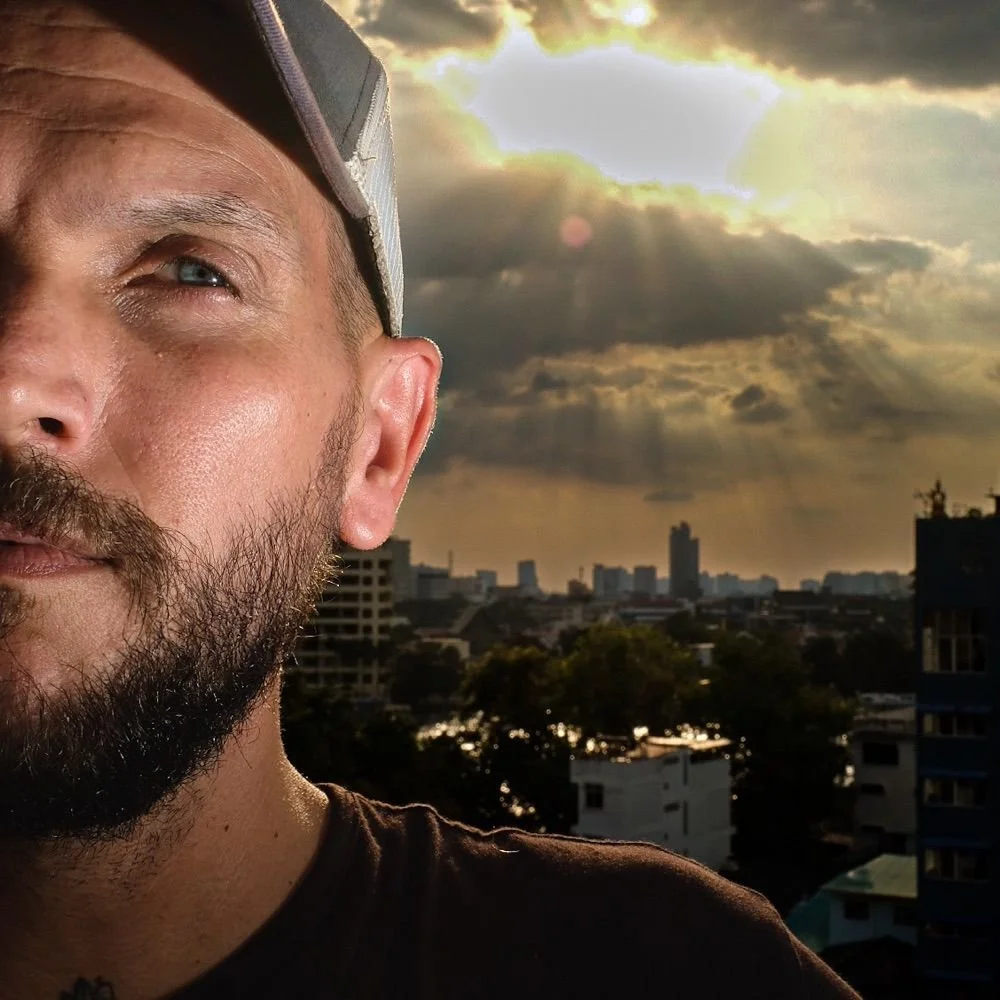
We are here to leave each other shook.
Once upon a time I held down a storyteller role in a major Berlin startup. A big part of that was ghostwriting “thought leadership” and summit presentations for executives. When I was assigned to develop that content, it almost always began with a who’s who of speakers, and what they were talking about.
That always struck me as… odd.
It assumed what would capture and imprint upon an audience’s imagination was conformity to markers already laid down. As though the speakers I was writing for had already forfeited the possibility that their work was connected to anything larger. As though they had forfeited connecting others to something larger than themselves.
The reality is —and this isn’t rocket science— the majority of just about any audience is swimming in alienation. Alienation from their own lives, from the work they pour their days into, from the conditions that shape their moment-to-moment.
Making someone feel seen in that, refusing to normalize it or gaslight them into repressing it can have massive impact and forge deep emotional connections. People will remember and even bond with just about anything that allows them to entertain access to a better version of themselves, of their surroundings. And it doesn’t require much effort or risk. It just takes empathy. And the creative will to nest that in diverse delivery systems.
If someone says they’re a storyteller, run.
Humans —all of us— are innately storytellers. Neurological and cognitive research is more and more looking at the human brain as an approximator; an organ that processes data and cobbles it together from nerve signals to provide us with a functional (and sometimes meaningful) but thoroughly selective version of the world we inhabit. We see this in everything from the way we read words by their first and last letters ( hypothesizing what’s in between), to amputees’ experience of phantom limbs, to how “culture wars” circle around vocabulary — vying to cement the historical, political, and value narratives even a single word can carry. Consciously and not, we function on storytelling.
Positing it as a specialization is —at best— getting the whole enterprise spectacularly wrong. At worst, it’s fraud. It’s why your internet search results are increasingly a fetid toilet of uselessness and manipulation brought to you by “SEO experts”. It’s why we were beseeched to “learn to code” while universities stripped the humanities for parts. And it’s why companies have gone all-in on AI. As a discreet, productive undertaking, stories carry for captains of industry a plug-and-play modularity indifferent to context.
Notably, these same companies advertise on podcasts whose premise is often two or more people having unscripted, meandering conversations. Typically featuring comedians. In other words, formats that depend upon and privilege observation. The dissonance there is instructive. It draws out a critical truth: Effective storytelling —that is, capturing imaginations and allowing audiences to read themselves into a narrative— is a matter of critical appreciation; of observing the world with sufficient curiosity and varied reference points, such that novel connections can be made, and new presentations of our experience become possible.
Disciplines are not substitutes for depth.
I have never really been comfortable self-applying terms like writer, or photographer. Not because they’re reductive (though there is that). More because mediums miss the point. They’re a strategic consideration, not an end unto themselves. These days, one can master the technicalities of a craft in a matter of days with mere YouTube tutorials. At points, I’ve made my living ghostwriting academic work for PhD candidates, bylines for CEOs, technical articles for software engineers, and op-eds for major documentary producers — despite not having graduated anything since kindergarten, myself.
What I bring to bear in working with words and images in any technical capacity barely warrants mention, relative to what I’ve sunk into being a curious and capacious observer and autodidact. Reading voraciously. Getting lost in subject matter I wasn’t looking for. Recognizing resonances therein. It’s my sincere hope that, when one looks at my output, that is the defining through-line.
It’s also the terrain in which I work best; my ostensible “value proposition” in client relationships or the work I commission with editors. Practically anyone can fart out “content” and tag it up with keywords to ensure “engagement”. The world doesn’t need more of that.
We are on this earth to leverage new presentations of our experience, new possibilities for connection. We are here to leave each other shook.
What are we waiting for?.